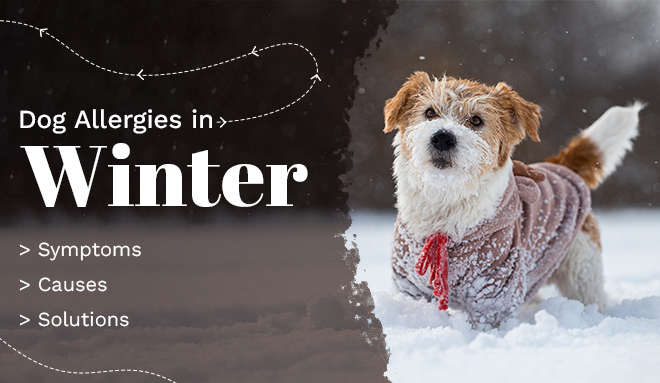
Similar to their hoomans, even dogs tend to get susceptible to allergic reactions in winter. Be it, the dry indoor air irritating sensitive skin or hidden triggers like dust mites thriving in heated homes, canine allergies often peak unexpectedly during the cold season. If your furry companion is scratching excessively, sneezing more than usual or experiencing red, inflamed paws, you’re not alone. Therefore, to help you out, we’ve come up with this blog, where we will discuss in detail about dog allergies in winter along with their symptoms, causes and solutions.
Read on to find out more!
Symptoms of Winter Allergies in Dogs
The following are some common symptoms of dog allergies in winter.
- Red & Dry Skin
- Itchy Skin or Pruritus
- Scratching
- Biting
- Licking
- Hair Loss
- Shaking Head
- Skin Lesions
- Ear Infection
- Sneezing
- Coughing
- Nasal Discharge
- Watery Eyes
Causes of Winter Allergies in Dogs
Let’s take a look at the major causes of winter allergies in dogs.
- Indoor Allergens
As dogs tend to spend a lot of time indoors during winter, they get exposed to allergens present in indoor spaces like dust mites, mold spores and dander. These allergens cause skin irritation in dogs known as atopic dermatitis, leading to intense itching, redness, rashes, hair loss or hot spots causes by self-trauma.
Besides causing skin irritation, indoor allergens also lead to ear infections or respiratory issues, including sneezing and coughing.
- Environmental Factors
The combination of outdoor cold air and the indoor dry air in winter dries out dogs’ skin and leads to irritation and itchiness. This loss of natural oils causes dryness, itchiness, flakiness and irritation. The change in humidity levels and temperature can also exacerbate a dog’s pre-existing skin condition.
- Dietary Factors
Diet plays an important role in its ability to withstand allergens. If canines’ diet is not well-balanced and lacks essential nutrients, it can make them vulnerable to environmental triggers. Therefore, it is important to provide dogs with a nutritious diet enriched with fresh and good quality ingredients. It will not only help them combat allergies but also keep their skin and coat healthy.
- An Overactive Immune System
During winter, an overactive immune system in dogs can trigger allergic reactions or autoimmune responses rather than infections. This happens when the body mistakenly attacks harmless substances like indoor allergens or irritants. This leads to heightened inflammation and discomfort in canines.
Solutions to Winter Allergies in Dogs
Here are some vet-recommended ways that will help you address winter allergies in your dog.
- Anti-Itch Skincare Solutions
There is a wide range of skincare solutions available on the market designed to address several winter-related skin issues in dogs, including sensitivity, dryness and irritation. The products moisturize your dog’s dry and flaky skin and help alleviate irritation and itching.
Some of the best anti-itch skincare solutions for dogs include:
- Moisturizing Shampoos
Bathing your dog with dog-specific shampoos formulated to moisturize the skin can help relieve itchiness, irritation and flaky skin issues caused by dryness or allergic reactions. provide dogs relief winter allergies.These shampoos also help hydrate and nourish the skin, providing relief from winter-related skin irritation.
The following are the best dog-specific shampoos recommended to address winter allergies:
- Dorwest Soothe & Calm Shampoo
- Dermoscent ATOP 7 Shampoo
- Bob Martin Natural Citronella Oil Conditioning Shampoo
- Dorwest Scent & Shine Shampoo
- Oral Supplements
There is a plethora of oral supplements available for dogs formulated to address a wide range of skin issues, including the ones triggered by winter allergies. The supplements also help reduce inflammation, strengthen the skin barrier and support the immune system.
The following are some of the most effective oral supplements for dogs to go for:
- Dorwest Evening Primrose Oil Liquid
- Dorwest Omega Star
- Dorwest Evening Primrose Oil Capsules
- Humidifier
A humidifier works excellently to relieve skin allergies caused by indoor heating. The device adds moisture to dry indoor air, which soothes nasal passages and makes breathing more comfortable. The presence of moisture in the air also hydrates the skin and relieves itching, flakiness and excessive scratching caused by low humidity and allergens like dust mites and dander.
Frequently Asked Questions (FAQs)
- How can I help my dog suffering from winter-related allergies?
To help your dog combat winter allergies, you should vacuum the furniture and carpets of your home and wash your dog’s bedding to eliminate possible allergens.
In order to address allergic reactions, you can make use of dog-specific moisturizers or bathe your dog with a moisturizing shampoo. Alternatively, you can administer oral supplements designed to soothe winter allergy symptoms.
For seasonal skin sensitivities, dog-specific moisturizers or moisturizing shampoos can support skin comfort. In some cases, oral supplements formulated to support skin health may also be considered
- When should I seek a vet’s advice if my dog is experiencing winter allergies?
If the allergic reactions don’t seem to improve with home care, you should seek a vet’s help.
- Are human allergy medications safe for dogs?
To address allergic reactions in dogs, you should seek help of treatments designed specifically for canines. However, it is recommended to seek your vet’s advice before administering any treatment to your dog.
- Are there any home remedies to relieve dogs from winter allergies?
A few home remedies that may offer temporary relief from winter allergic reactions are oatmeal bath, coconut oil application and apple cider vinegar rinse.
Bottom Line
As a dog parent, it is important that you take proactive steps to keep your pooch safe from winter allergies. You can effectively do so by eliminating indoor allergens such as dust mites, mold and dry air, which intensify symptoms including itching, paw licking and skin irritation. By using humidifiers to maintain 40-50% humidity, washing pet bedding weekly in hot water, vacuuming the furniture and carpets and bathing dogs with hypoallergenic shampoos every 2-3 weeks, you will significantly reduce the symptoms and provide your doggo with much-needed comfort. However, if symptoms persist, you must consult a veterinarian for allergy testing and appropriate treatments to ensure a comfortable life for your canine companion.
At Discount Pet Care, we carry the above-mentioned products and a wide range of other products formulated to relieve dogs from winter allergic reactions. Check out our online store to procure your preferred products at discounted prices.