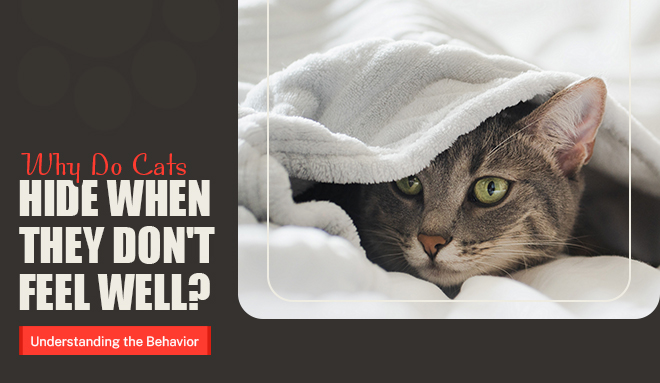
You come home and call your kitty, but nothing. No thump on the couch, no figure-eight around your ankles. Eventually you find her wedged behind the laundry basket, watching you. Cats hide when they feel unwell because it’s an old survival instinct: a hiding spot feels safe when they’re vulnerable. But cats also hide for plenty of ordinary reasons, so hiding alone doesn’t mean something is wrong. In this blog, we will help you understand feline behavior regarding hiding, the difference, and when to call your veterinarian.
Why Do Cats Hide in the First Place?
Most hiding is perfectly ordinary. Cats are hunters, but in the wild they’re also prey for bigger animals, so caution is built in. An enclosed spot lets a cat nap without feeling exposed and is, for plenty of cats, just like a private place to retreat to, the way you might shut a door when you want some peace. Personality plays a part too. For example, a naturally shy cat might seek solitude far more often than a social one.
Why Do Cats Hide When They Don’t Feel Well?
In the wild, a cat that looks weak is an easy target, so cats evolved to hide pain and illness. That instinct is still strong in a safe living room, and it’s a big reason illness goes unnoticed. When a cat feels sore, nauseous, or feverish or just run down, it may prefer a secluded place. A quiet corner means fewer disturbances, uninterrupted rest, and less noise to deal with.
Do not flip that around, though. Not every hiding cat is sick, and not every sick cat hides. Some cats become clingier or more irritable instead.
How Can You Tell Normal Hiding from a Concerning Change?
The most useful baseline you can have is, knowing your cat’s usual habits.
If they nap in the closet every afternoon, that’s routine. But, you should pay attention to genuine changes in cat behavior, such as hiding that starts suddenly, happens a lot more often, drags on, or moves to places your cat does not normally choose.
For example, if your cat usually greets you at the door but suddenly starts spending most of the day hiding, it may be a sign that something has changed. Occasional hiding may not be worrisome, but if it becomes frequent or lasts longer than usual, with other changes in behavior, it’s better to pay close attention.
What Other Signs Might Appear When a Cat Is Not Feeling Well?
Hiding can be the first sign of illness, and sometimes the only early one, so look at the other changes in cat behavior too, such as:
- Appetite and thirst: Eating or drinking a lot more or less than usual, or walking away from a favorite food.
- Energy: Less play, more sleep, or a general slowness that does not fit their usual self.
- Cat Grooming: A scruffy, greasy, or matted coat; extra shedding or dandruff; or a dull coat can mean a cat is not grooming well. Similarly, too much grooming, such as licking one spot until it is bald, red, or raw, can point to a skin problem, pain, or stress.
- Mood: Pulling away from you, a short temper, sudden clinginess, or vocalizing more (or less) than usual.
- Litter box habits: Diarrhea, or a change in how much your cat urinates, including extra trips in and out of the box or straining while they are in it.
None of these signs confirm anything by themselves. What matters is the whole picture: how long it’s been going on and how far it is from your cat’s normal behavior.
Can Stress or Environmental Changes Make Cats Hide More?
Yes, stress can send a cat under the bed too, which is what makes hiding such a tricky signal. Visitors, a new pet, tension with another animal, a move, rearranged furniture, or a sudden loud noise can all make a cat retreat. Cats cope better with predictable routines, and a safe place to withdraw gives them a sense of control. The tricky part is that stress hiding and sick hiding look almost identical from the outside.
If something obvious changed at home, that’s useful to know, but it doesn’t rule out illness, especially if your furball is still hiding long after things have calmed down.
How Can You Help a Cat That Keeps Hiding?
A few practical steps can make a real difference without requiring you to diagnose anything yourself:
- Give your cat a quiet spot that nobody will disturb, such as a covered bed, a cardboard box on its side, a carrier left open with a blanket over, or a perch with a hammock-style dip. In a multi-cat home, try to have at least one hiding spot per cat in different parts of the house.
- Keep food, water, and the litter box within easy reach, and stick to your cat’s regular routine as much as you can.
- Reduce noise or chaos around your cat. Don’t drag the mout or force interaction. Let your fur friend come out on their own, and don’t punish them for hiding.
- In the meantime, keep low-key tracking of your cat’s behavior, like what and how much they eat and drink, the energy levels, and their litter box habits. That record becomes genuinely useful if you do end up needing to describe the pattern to your veterinarian.
Cat behavioural products such as covered beds, hideaways, scratching posts, and interactive toys can help make the home feel calmer. These may help support your cat’s overall well-being, but they are not a substitute for a veterinary visit if you suspect anything.
When Should You Contact a Veterinarian?
These are emergencies that should not wait, even if your cat is still hiding and seems otherwise “fine” in between.
Sudden or lingering changes in hiding deserve a veterinary check-up, especially alongside changes in appetite, energy, grooming, or litter box habits. Don’t wait for things to get worse. If the hiding lasts more than a day or two along with other changes, book an appointment.
Signs such as,
- Difficulty breathing
- Collapse
- Straining in the litter box with little or no urine
- Not eating for 24 hours
- Pale, yellow, or bluish gums
should be treated as emergencies even if your cat seems fine between episodes.
Final Thoughts
Hiding is a completely normal part of being a cat, and it goes back long before cats lived with people. The hiding itself is not the problem. Changes in your cat’s usual behavior are. You know your cat better than anyone, so trust your instinct, and call your veterinarian when something feels off. It’s the surest way to tell a cat who wants some peace from one who needs help. For more ways to keep your cat comfortable, browse our pet care products at DiscountPetCare.