Bringing a new puppy home is a job full of responsibilities and rewards. As much as you are fascinated by those slobbery kisses, tiny paws, and gentle nibbles, there’s a lot to figure out, especially when it comes to their food.
What should your puppy eat? How many times a day? And when is it finally time to transition from puppy food to adult food? Don’t worry. Feeding your little canine companion doesn’t have to feel like a guessing game.
In this blog, we will discuss a practical puppy feeding guide to help you feed your growing pup with confidence.
Why Is the Right Nutrition Essential for Puppies?
The right balance of nutrients is crucial to support a puppy’s growth and development. Since their bodies are constantly growing, it is essential to keep up with their changing nutritional needs. The goal isn’t simply to help your puppy grow bigger; it’s to ensure they grow at a healthy rate.
During puppyhood, adequate calories, protein, fats, vitamins, and minerals support the healthy development of muscles, bones, organs, brain, and immune system. It is particularly important for large and giant breed puppies, as overfeeding them can boost their growth too quickly and lead to skeletal problems.
What Should Puppies Eat?
For most puppies, choosing a diet that is complete, balanced, and specifically formulated for them is the safest starting point. You have three options when it comes to feeding your puppy:
- Dry food:Convenient, easy to portion, and simple to store.
- Wet food: Offers a softer texture that puppies may prefer.
- Combination feeding:A mix of wet and dry food for a nutritionally balanced diet.
Depending on their age, breed, size, and metabolism, some puppies may require dog supplements to support their calcium and other dietary requirements. However, always consult a veterinarian before adding any supplements to your dog’s diet, as they can be unnecessary and harmful in some cases.
How Often Should You Feed a Puppy?
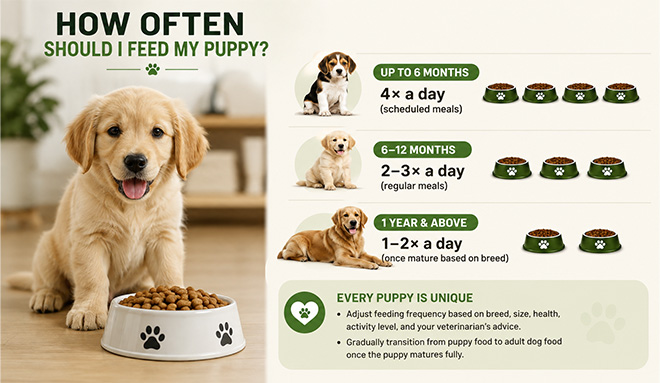
Puppies have small stomachs but big nutritional demands, so they generally need more frequent meals than adult dogs. Moreover, establishing a feeding schedule will help you with potty training as well, as you will have a better sense of when your puppy needs to go outside. Here’s typically how often you should feed your puppy depending on their age:
- Puppies up to 6 months of age: Once weaned, give three to four scheduled meals a day until it is 6 months old.
- Puppies from 6 to 12 months of age: Reduce the number of feedings to two or three times a day.
- Puppies aged 1 year and above: Once the puppy matures based on its breed, you can feed adult food once or twice a day.
These are general guidelines, although feeding frequency should be adjusted based on your puppy’s breed, size, health, and individual needs. Very small or toy breed dogs may need particularly careful meal planning because they can be more vulnerable to low blood sugar when they don’t eat adequately.
How Much Should You Feed a Puppy?
This is where things get a little less straight forward. There isn’t one perfect scoop of food that works for every puppy. Feeding amounts depend on various factors such as the puppy’s breed, size, age, activity level, and overall health.
Start by following the feeding instructions on your puppy food label, but treat them as a starting point, not a prescription. Food labels provide general recommendations, and portions should be adjusted according to how your puppy is growing and maintaining body condition.
A useful habit is to monitor your puppy’s weight regularly and discuss their growth pattern with your veterinarian. Your vet can tell you whether your puppy is growing at an appropriate rate rather than simply looking at the number on the scale.
And don’t forget treats. Training treats, chews, toppers, and table scraps all add calories. As a general guideline, treats and other extras should make up less than 10% of a dog’s daily calorie intake.
Also read this: Dog Nutrition Guide: What Is a Complete & Balanced Diet for Dogs?
When Can Puppies Start Eating Solid Food?
You can introduce solid foods to your pup around four weeks of age. Initially, you may notice that puppies aren’t eating much of the solid food, as they are only familiar with nursing. But gradually they will adapt to the texture and taste of the solid food. By week 7-8, almost all puppies can generally eat independently and are typically ready to be weaned. If you’re bringing home a puppy at 8 weeks, ask the breeder, shelter, or rescue personnel what food the puppy has already been eating and follow the same for a few days.
When Should Puppies Switch to Adult Dog Food?
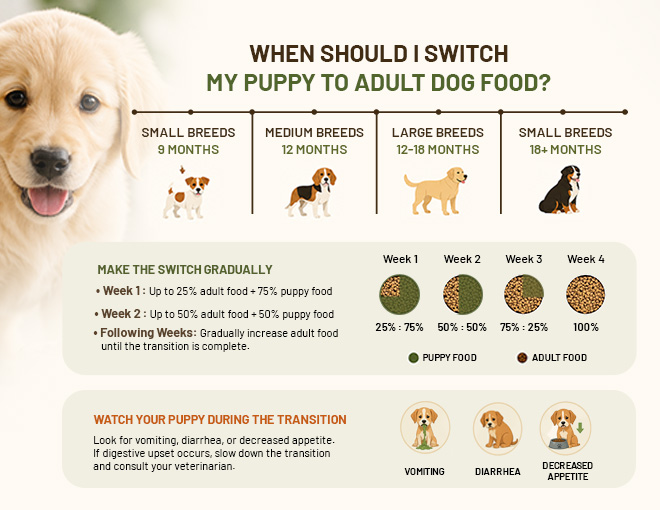
There’s no one-size-fits-all answer to this question. As a general rule, puppies can switch to adult dog food upon reaching complete maturity. Small and medium-breed dogs may reach maturity earlier, often around 9–12 months. Large and giant breeds can continue growing much longer, with maturity sometimes taking 12-18 months or more. Hence, you can keep feeding a growth diet till the puppy reaches maturity, then discuss the transition to an adult maintenance diet with your veterinarian.
When it is time to switch, it is important to make the change gradually over several days to reduce the chance of digestive upset. For example, you can start by adding up to 25% of the new adult dog food to your puppy’s routine food for at least one week. Next week, you can add up to 50% of the new food, and then gradually increase the portion of the new food over the next few weeks.
Keep an eye on any signs of discomfort like vomiting, diarrhea, or decreased appetite during the transition to adult food. If this happens, slow down the transition process and contact your veterinarian if required.
Puppy Feeding Takeaways
Remember, your puppy’s feeding plan should grow with them. What works for an 8-week-old puppy may not be right at six months, and what works for your friend’s Labrador may not work for your Chihuahua.
Always consult a veterinarian to work out a puppy feeding plan that’s appropriate for your puppy’s unique nutritional requirements, and read the food product labels carefully, especially the nutritional facts and guidelines. And regardless of your puppy’s age, stick to your feeding schedule to establish a routine. The right care and nutrition will help your puppy grow into a strong and healthy adult dog.
Keep your pet protected and well cared for with the right essentials. Explore a wide range of pet care products at DiscountPetCare, from flea and tick treatments to heartworm prevention and skin care, all at competitive prices.