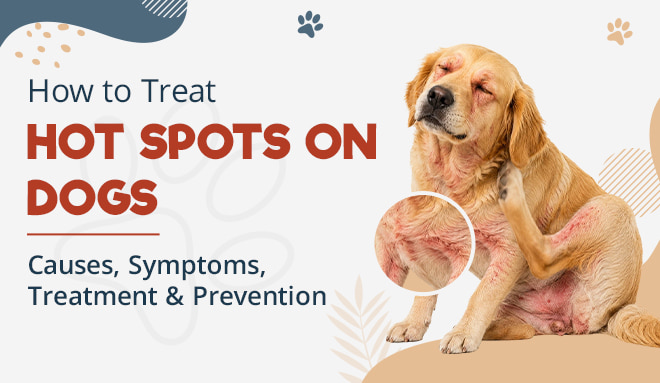
On a random morning, you see that your dog is constantly itching and licking a particular area. When you take a closer look, do you notice a red, moist patch with a foul odor? If this sounds familiar, you’re likely dealing with a hot spot: a common skin problem in dogs that may quickly become painful if not treated on time. In this blog, we will discuss what hot spots in dogs are, how they happen, and what to do about them.
What Are Hot Spots in Dogs?
Canine hot spots, also known as pyotraumatic dermatitis or acute moist dermatitis, are localized patches of red, inflamed skin lesions. Hot spots get their name from the warmth generated by inflammation. They tend to show up on the face, neck, limbs, or hips. However, they can occur anywhere on the dog’s body.
Dogs with long or thick coats or drop coats are most likely to develop this condition. The unsettling part is that hot spots on dogs can develop rapidly. A lesion that started as a small red mark like an insect bite can turn into a hot, red, oozing, and painful lesion in a matter of hours. These may be hidden under matted fur until your dog’s constant licking at itchy and smelly sores becomes obvious.
What Causes Hot Spots on Dogs?
Hot spots are normally caused when a dog vigorously scratches, licks, and chews an itchy spot with enough force to break the skin. Once the skin barrier is compromised, the constant trauma to the dog’s skin allows bacteria to move in and results in a secondary infection. Unfortunately, this creates a self-perpetuating cycle of itching and scratching since the bacterial infection is another irritant.
Thus, any condition that causes your dog to feel itchy has the potential to result in a hot spot. Common triggers include:
- Allergies
- External parasites
- Ear infections
- Skin infections
- Poor grooming
- Contact irritants
- Anal gland infections
- Stress or boredom
- Moisture trapped in the coat from swimming or bathing
- Other underlying health issues
Signs and Symptoms of Hot Spots on Dogs
Hot spots are generally easy to recognize once you know what to look for. Watch for:
- Well-defined areas of redness, swelling, and hair loss
- A moist lesion that may discharge pus or fluid
- Crusting and matting of the surrounding fur
- A foul odor from the site
- Sensitivity or pain when touched
- Affected lesions may enlarge rapidly
Many skin conditions have symptoms similar to hot spots, so it’s important that you contact your veterinarian right away for accurate diagnosis.
How to Treat Hot Spots on Dogs?
Veterinarian treatment focuses on two things at once: treating the current lesion and breaking the itch-scratch cycle to prevent the development of a deep skin infection.
Typically, this involves clipping the fur around the hot spot so air can reach the skin and the area can be cleaned properly, followed by disinfecting with gentle antiseptic cleansers such as chlorhexidine solution that kills bacteria.
Depending on the severity of the infection, your vet may prescribe topical or oral antibiotics to treat the secondary bacterial infection, along with topical or oral steroids/antihistamines to control inflammation and decrease itching. Your vet may also prescribe allergy treatments for dogs that stop the underlying cause of itching. An Elizabethan collar, also known as an E-collar or cone, may be recommended temporarily to stop your dog from chewing while the skin heals.
During recovery, your veterinarian may also recommend dog skin care products, such as medicated shampoos, antiseptic sprays, or soothing topical solutions, to help keep the skin clean and support the healing process. You can also follow practical dog skin care tips to help reduce the chances of hot spot recurring.
Most dogs show real improvement within three to seven days once the treatment starts, though full healing can take a week or more.
How to Prevent Hot Spots in Dogs?
A hot spot is easier to prevent than to treat, so try to keep your dog free of hot spots by following these preventive measures:
- Stay consistent with flea and tick treatments for dogs.
- Maintain your dog’s good hygiene with routine grooming.
- Regular brushing prevents the matting that traps moisture against the skin.
- Bathe your dog with gentle, vet-approved shampoos. If recommended by your veterinarian, medicated shampoos such as Malaseb Shampoo can help support healthy skin when used as directed.
- For dogs that swim or are frequently bathed, dry their coats thoroughly.
- Manage underlying allergies with your veterinarian’s recommended treatment plan.
- Ask your veterinarian whether omega-3 fatty acid supplements may benefit your dog’s skin health.
- Keep an eye on your dog to identify when they tend to lick or chew particular areas. It can help you catch problems before they turn into a hot spot.
Final Thoughts
Hot spots are painful and uncomfortable for dogs, and without treatment, the condition can worsen quickly. Fortunately, with prompt treatment, your dog’s hot spots will resolve quickly and will give them the fastest path back to comfortable, healthy skin. To support your dog’s overall well-being, you can explore quality pet care products from DiscountPetCare.com at competitive prices.
Frequently Asked Questions
When can hot spots occur?
A. Hot spots can occur at any time of year, although warm, humid weather usually causes more cases.
Is there a vaccine for hot spots?
A. There is no vaccine for hot spots on dogs.
Are hot spots likely to recur?
A. A well-treated hot spot is likely to return if the root cause is not identified and managed properly. Taking preventive measures can help reduce the risk of hot spots recurring in dogs.
What breeds are prone to hot spots?
A. Though any breed can develop a hot spot, it is most common in dogs with long or thick coats, such as German Shepherds, Rottweilers, Saint Bernards, Newfoundlands, Labrador Retrievers, Golden Retrievers, and English Bulldogs. Even water-loving dogs carry a higher risk factor because damp fur is an ideal environment for hot spot-causing bacteria to grow.
Can hot spots be contagious to other dogs?
A. These hot spots on dogs are caused by bacteria and are not contagious to other dogs. However, if the underlying causes are found to be fungal or parasitic, then it’s possible it may spread to other dogs.